
In-House vs Outsourced Merchandising in KSA: Cost, Compliance and Execution Quality
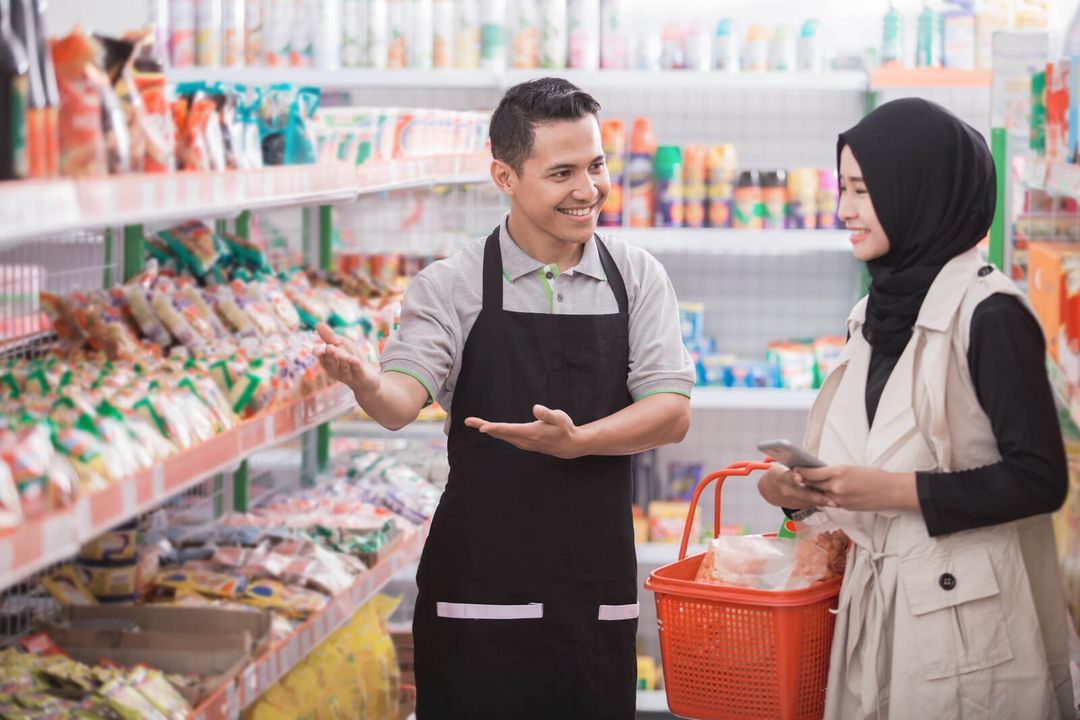
For Saudi FMCG and fresh food brands, merchandising is no longer just a question of putting people in stores. It is a decision about cost, compliance, culture, shelf standards and how much management attention the brand wants to keep inside the business.
The choice is especially sensitive in fresh, chilled and short-shelf-life categories. These products are won or lost every day. A delayed visit, missed FEFO rotation, poor return capture or weak salesperson-merchandiser coordination can show up quickly as wastage, out-of-stock risk, retailer friction and lost sales.
Most brands in KSA are really choosing between three operating models: an in-house merchandising team, a dedicated sponsored outsourced team, or a shared/non-sponsored outsourced model. None of them is universally right. Each model carries a different trade-off.
Model 1: In-house merchandising teams
An in-house team gives the brand the highest level of direct control. Merchandisers are part of the company culture, often stay longer, and may develop deep route knowledge and strong relationships with salespeople and store teams.
This model works well when the category depends heavily on trust, daily ownership and brand-specific routines. In fresh food, that ownership can matter: the same merchandiser knows the route, the store team, the return pattern, and which outlets need extra attention before shopper traffic builds.
The trade-off is cost and management load. The brand carries recruitment, visas or sponsorship exposure where applicable, GOSI, leave, payroll, end-of-service obligations, Saudisation planning, HR issues and replacement hiring. When the team is small, this may feel manageable. As coverage grows across Riyadh, Jeddah, Dammam and other cities, the hidden workload becomes harder to ignore.
Model 2: Sponsored outsourced merchandising
A sponsored outsourced model keeps the team dedicated to the brand, but moves much of the employment, HR, payroll and compliance machinery to a managed partner. For many Saudi brands, this is the middle path: more structured and loyal than shared manpower, but lighter than carrying the full team internally.
Done well, the brand keeps a dedicated field force, clear KPIs and category-specific training. The partner manages recruitment, onboarding, payroll operations, leave, documentation, Saudisation exposure, performance governance and replacement hiring. The brand focuses on execution outcomes rather than employment administration.
The risk is partner quality. If the agency treats the team as commodity manpower, standards drop. If it governs the programme with clear SOPs, supervisor rhythm, field technology and weekly reviews, quality can be protected while cost and compliance pressure reduce.
Model 3: Shared or non-sponsored outsourced merchandising
Shared merchandising is usually the lowest-cost and fastest-scaling model. It can work for audits, light visibility checks, POSM tasks, seasonal bursts, or lower-complexity categories where deep route ownership is less important.
For fresh food, however, brands should be careful. Shared teams may not build the same store memory, salesperson coordination or daily accountability needed for expiry checks, returns, FEFO discipline and early-morning shelf recovery. The savings can be real, but so can the execution variability.
The real decision frame
The decision is not simply “in-house or outsourced.” The better question is: which trade-off does the business want to own?
- Choose in-house when loyalty, control and culture matter more than cost relief and administrative simplicity.
- Choose sponsored outsourcing when the brand wants dedicated execution, compliance relief, scalable governance and a more variable operating model.
- Choose shared outsourcing when the task is simple, short-term, audit-heavy or less dependent on route ownership.
In fresh food and chilled FMCG, the sponsored model is often the most practical option when a brand wants to reduce employment complexity without losing daily field discipline.
What must be protected during transition
The most common outsourcing mistake is treating transition as a contract change. It is not. It is a people, compliance and execution change happening at the same time.
If existing merchandisers are moving from an internal model to a partner model, the transition should include:
- Person-by-person role and documentation review.
- Clear explanation of compensation, benefits, payroll date, leave and reporting line.
- Iqama or profession checks where sponsorship transfer is involved.
- Face-to-face employee conversations, not generic announcements.
- Field shadowing before the takeover date.
- Parallel KPI tracking during the first month.
- Daily escalation support during the sensitive first 30 days.
The field team is not just headcount. It carries route memory, store relationships and informal ownership. A good transition protects that asset instead of pretending it does not exist.
Fresh food KPIs should be different
Fresh merchandising cannot be managed by visit counts alone. A merchandiser can visit every store and still miss the work that matters.
Useful KPIs include:
- Priority SKU availability by store and visit window.
- FEFO/FIFO compliance and date-check completion.
- Near-expiry risk identified before write-off.
- Returns captured with photos, counts and approvals.
- Journey adherence and missed-visit recovery.
- Share of shelf and agreed facing compliance.
- Issue closure time for out-of-stock, display, pricing or return exceptions.
These KPIs connect field work to sales protection, wastage control and retailer confidence. They also make partner governance measurable.
How to choose the right partner
A merchandising partner in Saudi Arabia should be evaluated on more than billing rate. Ask how they recruit, how they handle Saudisation and GOSI governance, how they train for the category, how supervisors review the work, what technology captures store proof, and how quickly issues move from field report to corrective action.
For fresh food, ask specifically about early-morning coverage, route discipline, return workflows, photo standards, expiry checks and how sales and merchandising teams coordinate. The partner should understand that freshness is not an occasional audit. It is a daily operating rhythm.
The bottom line
In-house merchandising protects control and culture. Shared outsourcing protects cost and speed. Sponsored outsourced merchandising sits between the two: dedicated enough for serious execution, but structured to reduce employment and compliance complexity.
For KSA fresh food and FMCG brands, the best model is the one that protects shelf standards while making the operating burden lighter. That usually means choosing a partner that can manage both sides of the problem: the people transition and the store-level execution.