
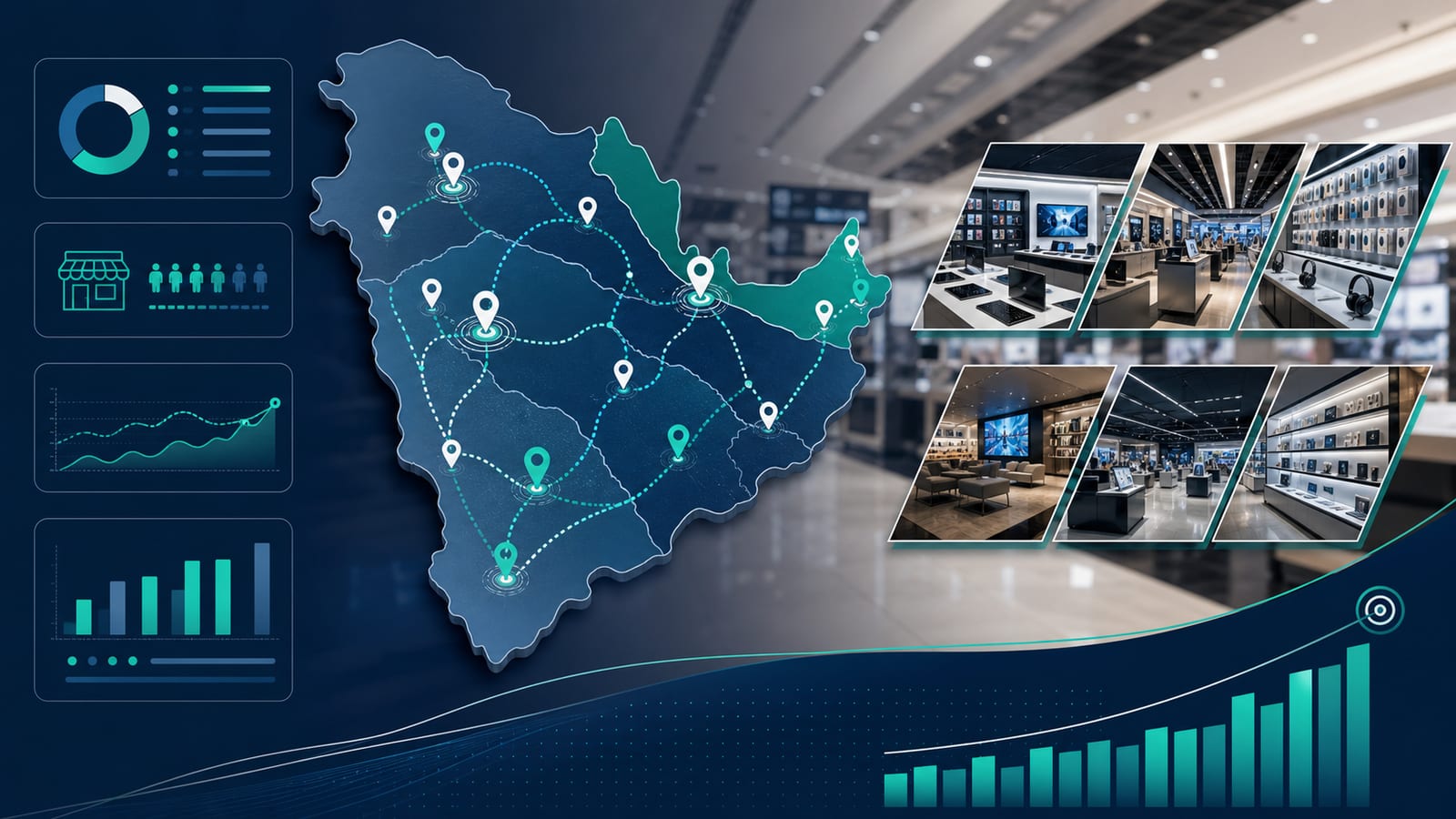
Building a retail field execution program in UAE and Saudi Arabia is not a headcount exercise. It is a coverage design problem. The best programs start with the store estate, the visit objective and the operating realities of each market.
Start with the door list, not the team list
Every store should have an owner, a visit purpose and a service level. Priority stores may need more frequent visits, while lower-density doors may be grouped into spoke routes or scheduled as full-day circuits.
Separate UAE and Saudi operating logic
UAE execution is dense, mall-heavy and shaped by access procedures, parking and retailer coordination. Saudi execution often needs stronger regional clustering because distance between cities can change the economics of every visit.
Use route clusters to protect cost and compliance
Route clustering groups nearby stores into practical territories. It reduces unnecessary travel, improves store familiarity and creates a monthly rhythm that managers can audit.
Build reserve capacity into the plan
Leave room for missed visits, launch support, store escalations and training refreshes. A plan with no reserve time may look efficient on paper but will break under real retail conditions.
Connect every visit to a KPI
A field team should not only visit stores. It should create evidence: check-in, check-out, photos, issue notes, planogram compliance and follow-up ownership.
Get the full playbook
If you are planning a retail field execution program across the GCC, download the playbook for a practical checklist covering coverage design, route planning, launch readiness and KPI governance.