
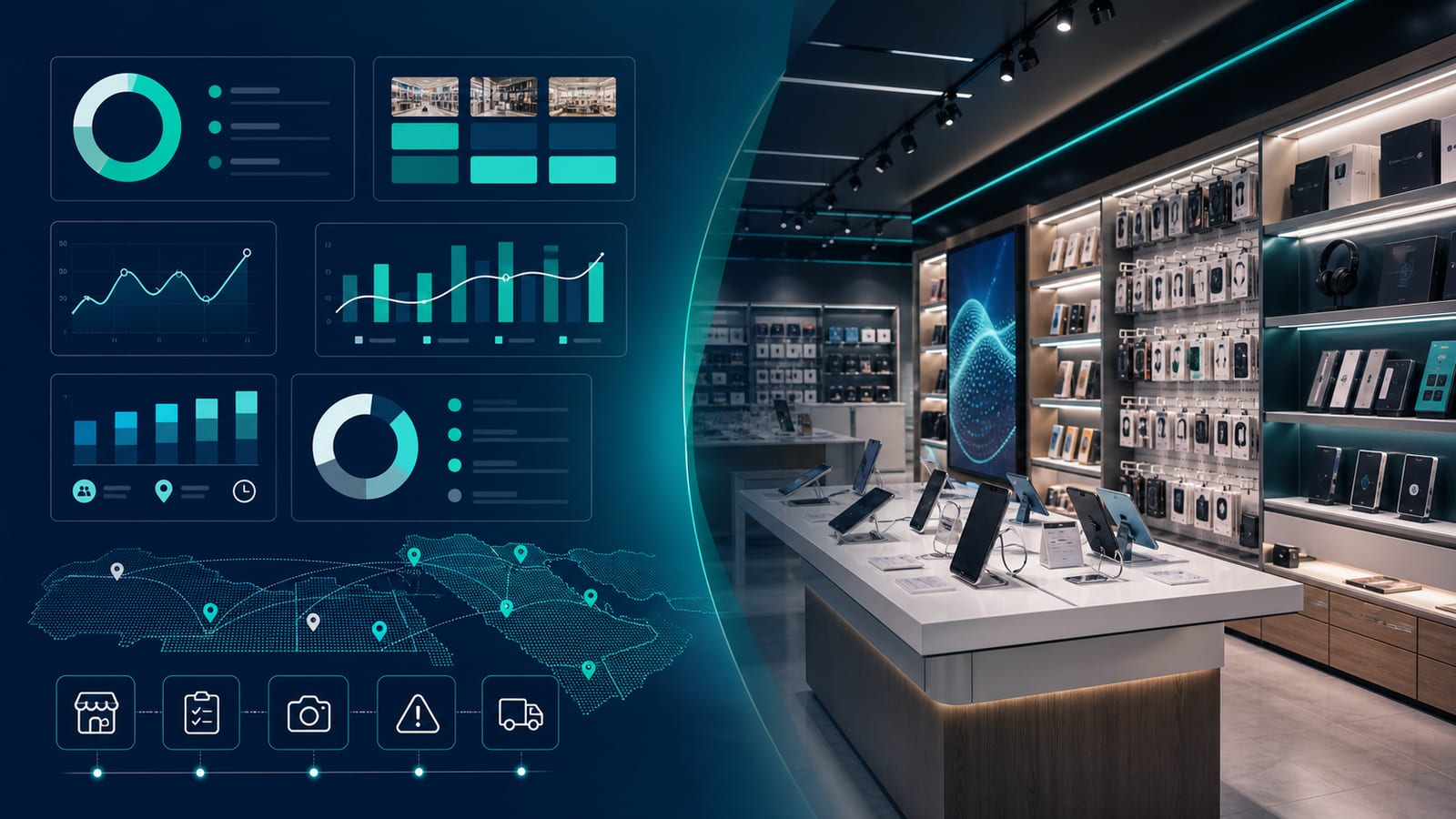
Retail field execution teams often report activity, but activity is not the same as performance. The right KPI dashboard helps leaders understand whether store visits are happening, whether standards are being followed and whether issues are being resolved fast enough.
1. Visit completion rate
This measures completed visits against the approved plan. It is the first signal of coverage reliability.
2. Time-in-store variance
Time should be close to the planned matrix. Too little time may indicate poor execution; too much may indicate route or task design issues.
3. Photo compliance
Photos prove execution quality. Track whether required fixture, signage, pricing, display and issue photos are captured correctly.
4. Planogram adherence
This measures whether the store reflects brand standards and agreed display guidelines.
5. Issue reporting speed
Retail problems lose value when they sit unreported. Track the time between observation and escalation.
6. Training and certification rate
Field staff should be certified before independent visits and refreshed when standards change.
7. Unmanaged attrition
High churn damages store relationships and execution consistency. Track preventable attrition separately from planned exits.
8. Client satisfaction or field NPS
Weekly metrics show operational health. Quarterly buyer feedback shows whether the program is creating confidence.
Get the full playbook
The GCC Retail Field Execution Playbook includes a simple KPI architecture for store visit compliance, route governance and launch readiness.