
Riyadh: scale with distance
Riyadh gives brands national visibility and a large modern trade footprint, but routes can lose time across wide districts. Cluster planning matters more than a flat visit target.
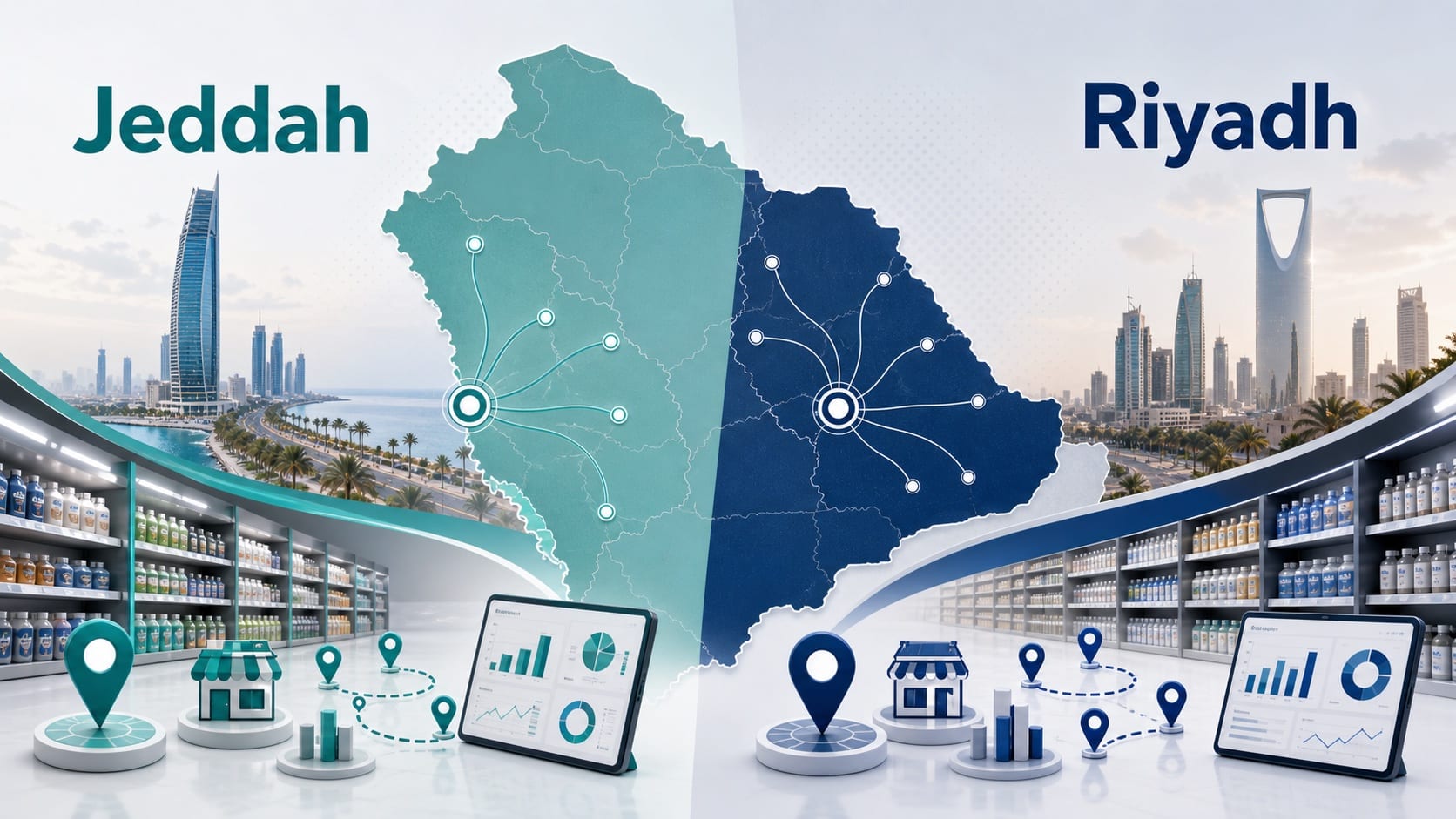
Brands often plan Saudi Arabia as one market, then discover that Riyadh and Jeddah behave like two different merchandising problems. The same monthly headcount can produce different visit counts, different route discipline and different cost per quality visit.
Population is part of the story, but it is not the pricing model. What moves the cost is the store list: how many doors must be covered, how far apart they are, how traffic behaves, and how much supervision is required to protect shelf standards.

Riyadh gives brands national visibility and a large modern trade footprint, but routes can lose time across wide districts. Cluster planning matters more than a flat visit target.
Jeddah can support tighter routes in many core areas, but coastal movement, peak traffic and older districts can reduce the theoretical visit count.
Large stores need fewer but deeper visits. General trade requires more stops, more routing discipline and tighter issue closure.
Saudi labour and Saudization rules apply nationally. The local difference is usually field productivity, not statutory cost.
| Driver | Riyadh planning implication | Jeddah planning implication | Why it matters |
|---|---|---|---|
| City spread | Longer routes across larger districts | More compact core coverage | Distance changes visits per day |
| Traffic pattern | Arterial road movement and suburban spread | Congestion around dense commercial zones | Travel time hides inside every visit |
| Store density | Requires district clustering | Can support tighter beats in the right areas | Density improves cost per completed visit |
| Team sizing | Often needs more route segmentation | Often needs traffic-window planning | Headcount should come from the beat plan |
| Reporting | Supervisor visibility across wider routes is critical | Exception reporting helps manage dense routes | Data prevents missed doors and repeated issues |
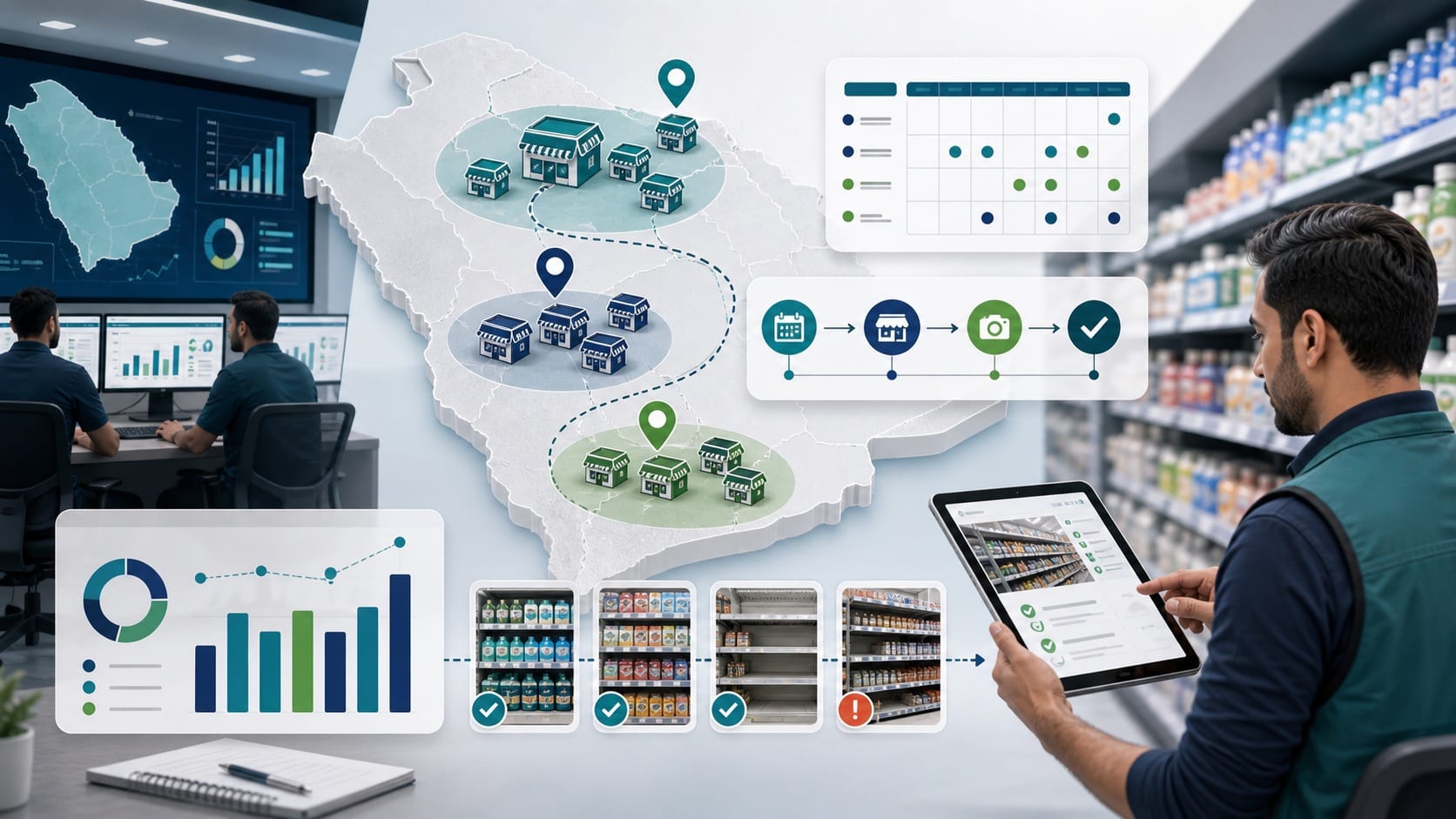
A strong Saudi merchandising programme can keep one national standard while running different city operating models. Training, KPIs, reporting and brand standards should be shared. Route structure, visit frequency, supervisor allocation and travel assumptions should be set at city level.
This prevents the most common mistake: a national average that overpays in one market and underserves the other.
Neither is automatically cheaper. Labour costs are governed nationally, while visit productivity depends on the exact store list, traffic and route density.
It depends on channel and geography. A clustered route can produce more quality visits than a scattered route even with the same headcount.
No. Riyadh and Jeddah need separate city teams, but they can run under one national governance model.
Channelplay builds city-level beat plans, manages compliant field teams and gives brands live visibility into store execution across Riyadh, Jeddah and the wider KSA market.
Explore visual merchandising services Discuss your coverage plan