
9 Shopper Behaviours That Should Shape Your Retail Strategy
Everyone talks about omnichannel and digital transformation, but most brands are still building retail strategy on outdated assumptions about how shoppers behave.
Here are 9 real shifts in shopper behaviour, and what they mean for your in-store, e-commerce, and phygital journey in 2026.
1. See In-Store, Buy Online Is the Norm
Shoppers in the UAE and Saudi Arabia now routinely visit stores to see, touch, and validate products before buying them online. The physical shelf is no longer just a sales point; it is the top of funnel for e-commerce.
- Design packaging and shelf communication so shoppers can quickly recognise and search your product later.
- Make in-store experiences search-triggering, with clear product names, strong visuals, and easy to scan claims that carry over to digital.
2. Experience Rules, Friction Kills
Modern shoppers want blended journeys: in-store advice plus digital convenience. At the same time, they quickly abandon sites that are hard to navigate or have a painful checkout.
- Fixing core UX, navigation, search, mobile, checkout, often gives a faster ROI than launching a new campaign.
- Don’t let a clunky digital experience undo all the effort spent on media, in-store marketing, and influencers.
3. BNPL Is Reshaping Baskets
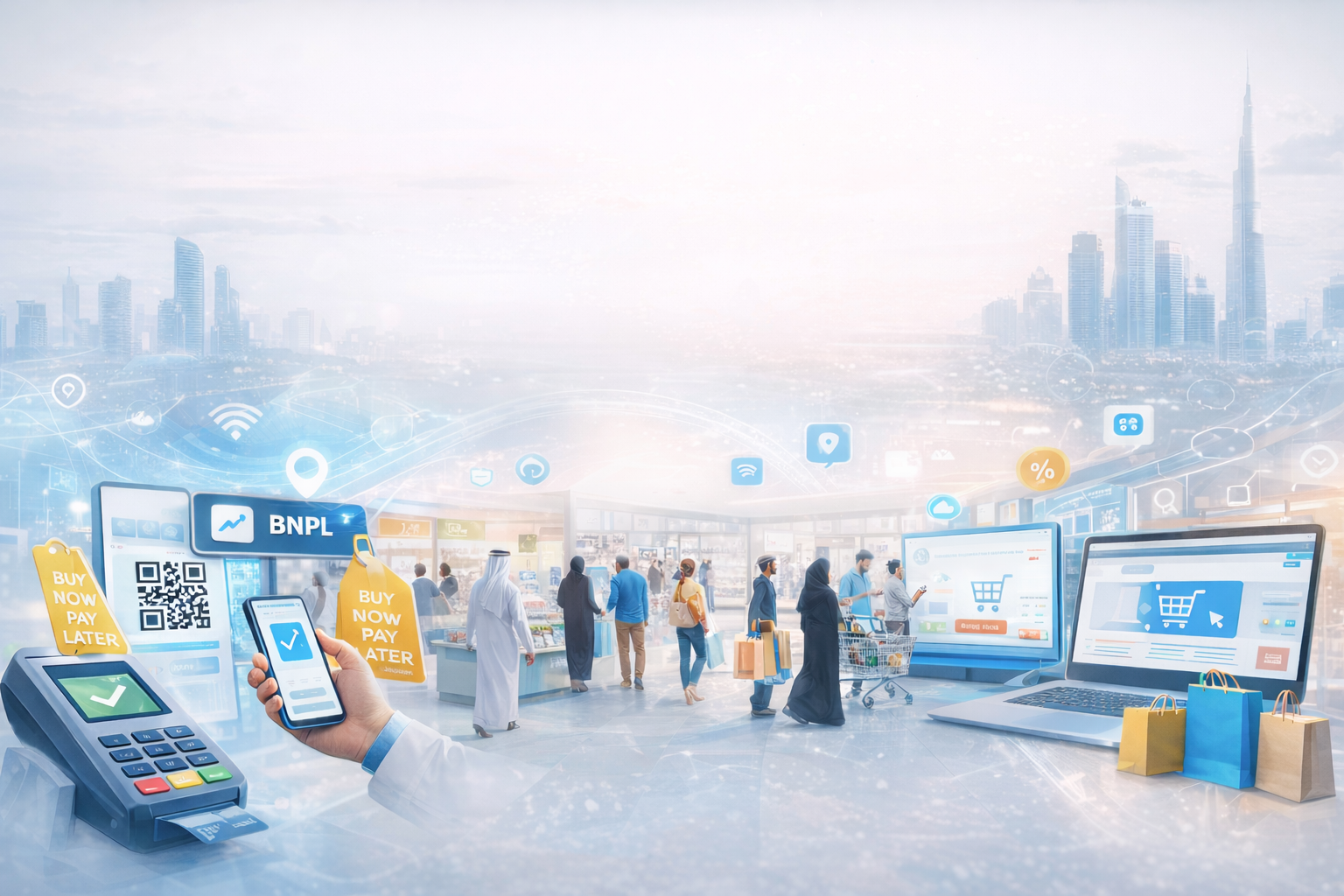
Buy Now, Pay Later and flexible payments are quietly changing how consumers plan and expand baskets. Shoppers are more open to premium and larger packs when they can spread payments.
- Use BNPL messaging in retail media and on shelf, not just at checkout.
- Leverage flexible payment options to push premiumisation and multi-pack bundles in beauty, appliances, and high-value FMCG.
4. Convenience Stores = Daily Habit, Hypermarkets = Big Trip
For many shoppers, supermarkets and local baqala-style stores are daily or near daily destinations. Hypermarkets still serve big trips and planned bulk purchases.
- Hypermarkets are for planned, bulk trips; most mental availability is built through frequent, small, local visits.
- Activation plans that over-focus on modern trade while under-investing in neighbourhood stores are misaligned with actual shopper habits.
5. Tech Is the Silent FMCG Game Changer
FMCG brands are no longer just testing tech; they are re-architecting marketing, supply, and engagement around AI, automation, and digital twins.
- Use AI demand forecasting to protect key seasons like Ramadan, Eid, and back to school.
- Connect retail execution data into these models so real-world store behaviour drives production and allocation.
6. Footfall Battles Are Hyperlocal
In cities like Dubai, Abu Dhabi, Riyadh, and Doha, multiple supermarkets sit within 3 to 5 km, and the winning store is the one that consistently pulls people in. Footfall patterns differ sharply by store type and location.
- Design activation and assortment by radius, not just by country or city.
- Use local insights (community profile, traffic, nearby workplaces, schools) to tailor promotions, pack sizes, and pricing.
7. Experience Is a Loyalty Currency
Product quality is the top driver of repeat purchase, but an increasing share of shoppers are loyal only to brands that offer a good shopping experience. This includes speed, clarity, payment, returns, and support.
- Shift from campaign centric to journey centric KPIs: how effortless was the experience from discovery to post-purchase?
- Measure and fix friction points that erode loyalty faster than any discount can rebuild.
8. AI in Retail: Elevating Stores, Not Replacing Them
Retail in this region is unique: digital does not replace physical, it elevates it. Stores remain social destinations, now layered with QR content, personalised offers, and intelligent inventory in the background.
- Use AI to decide what to show, where, and when, across store and app.
- Create a sense that your brand remembers the shopper, even when they move between offline and online.
9. Talent & Capability Are the Real Moat
While conversations focus on tech and capex, 2025 reshaped how companies think about talent; 2026 will increase pressure on skills and retention. As models become more data heavy and omni-channel, the brands that win are those that build modern commercial, analytics, and operations capability, not just add more headcount.
- Re-skill sales and trade marketing teams into hybrid profiles: storyteller, analyst, technologist.
- Partner with specialists to execute, analyse, and integrate tech so core teams can focus on strategy and innovation.
What This Means for Your Brand in 2026
For consumer brands in the Middle East, the question is no longer “Should we go omni-channel?”; that is table stakes.
The real question is: Are you designing your retail, e-com, and experience stack around how shoppers actually behave today?
Those who align with these shifts will:
- Capture demand that currently leaks between store and screen.
- Turn tech into an invisible backbone for better availability, pricing, and experiences.
- Build loyalty in a market with more choice, more apps, and more offers than ever before.